

Purpose, Patients, and Perseverance
If you’re like many of our colleagues in the oncology community, there are days when self-doubt creeps in. Oncologists tell us they sometimes ask themselves: Should I still be doing this? How can I help patients more? The work is hard. How do I make a difference?
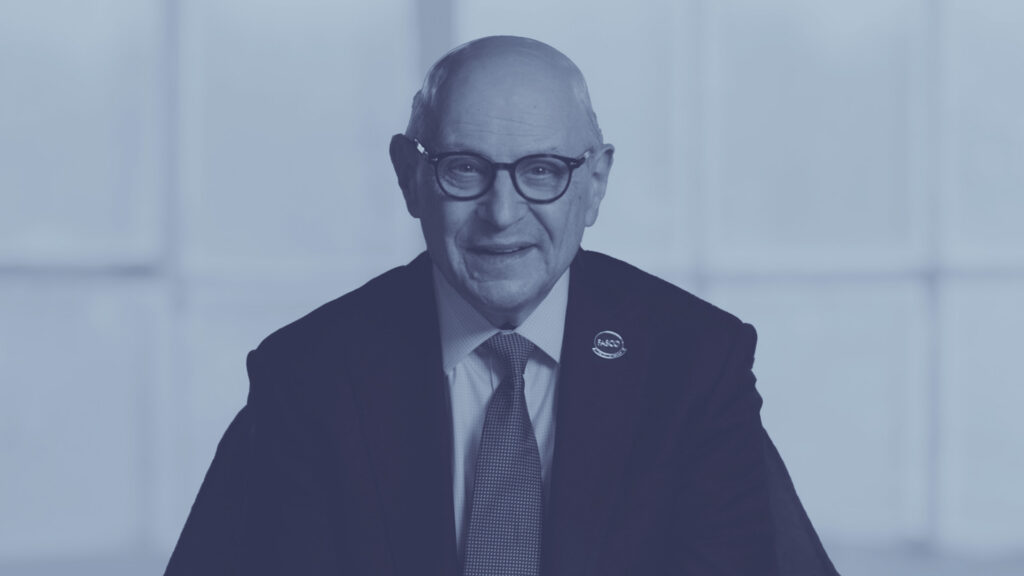
We put those questions to one of the true giants of the last 40 years in breast oncology, Dr. Larry Norton, who helped build the extraordinary breast service at Memorial Sloan Kettering Cancer Center in New York City.
For Norton, the difficulty of the work is not a reason to walk away—it is the reason to stay.
“I think in many ways it’s a familial thing for me. It’s a cultural thing for me to do everything that I can while I’m on this earth, to improve the life of other people that are on this earth,” he said.
That sense of responsibility is what sustains him through the hardest moments.
“Anybody who’s suffering is intolerable if you have the capacity of helping that person who’s suffering,” Norton said. “Certainly part of that is not causing any suffering, which I think is a very important topic for our present time. But the other part is: what talents do I have? What training do I have? What motivation do I have in my particular area that can make a difference?”
For Norton, those questions led him to cancer medicine—and specifically to breast cancer.
“So in my case, I chose cancer medicine, particularly breast cancer medicine, but many other choices are valid,” he said. “If everybody wakes up every morning saying, ‘What can I do to help alleviate the suffering of the world, to make it a better world, to help heal the world?’ then I think all of us could participate in making the world a better place. And that’s what motivates me every morning.”
Norton serves as senior vice president in the office of the hospital president at Memorial Sloan Kettering and is the founding scientific director of the Breast Cancer Research Foundation.
For clinicians who feel worn down, Norton’s message is simple and direct: the work matters because people need you. Helping others is not just the goal—it is the source of motivation itself.