

Sequencing Third-Line Options For Follicular Lymphoma
- CAR T-cell therapy and bispecific antibodies have emerged as highly active but mechanistically and logistically distinct modalities available as third-line options for relapsed follicular lymphoma.
- However, absence of head-to-head trials between the two approaches leaves optimal treatment order unclear.
- CAR T offers high rates of durable remission, particularly in higher-risk disease (e.g., POD24), while bispecific antibodies provide an effective, off-the-shelf option with expanding use in earlier lines
- Decision-making is guided by disease kinetics, prior therapies, patient fitness, and practical considerations rather than a single standard-of-care pathway.
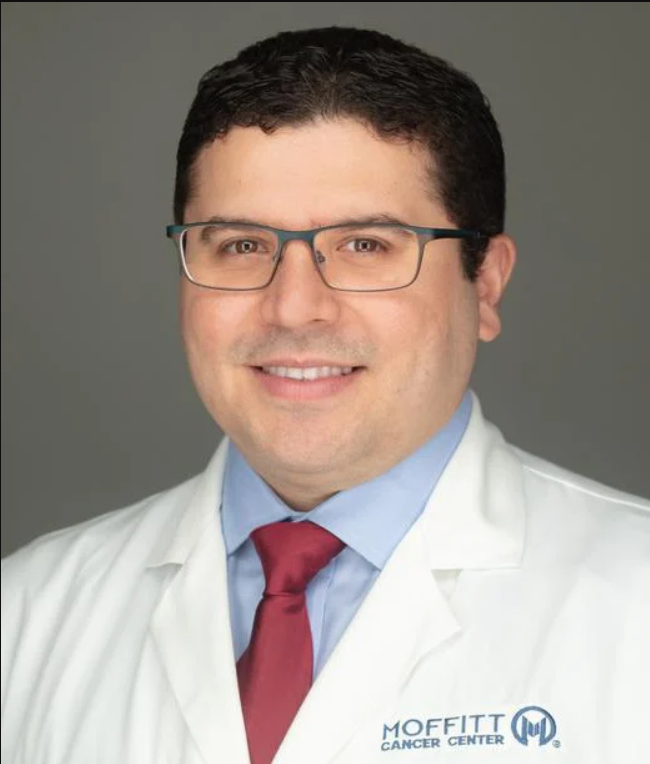
- “There’s not going to be a one size fits all,” Dr. Sameh Gaballa, a medical oncologist at Moffitt Cancer Center, tells SurvivorNet Connect.
The treatment landscape for follicular lymphoma (FL) is rapidly evolving, with multiple highly active therapies now available. As these options expand, figuring out how to optimally sequence them remains a challenge for clinicians.
“In the last five years we’ve had a tremendous amount of progress where there’s a lot of options including targeted treatments, immunotherapies, advanced immunotherapies, cellular therapies, antibody drug conjugates, and those are reshaping how we’re treating these diseases,” Dr. Sameh Gaballa, a medical oncologist at Moffitt Cancer Center, tells SurvivorNet Connect.
In the third-line setting, both CAR T-cell therapy and bispecific antibodies are approved, but unfortunately, there is no clear guidance on which option should come first at this time.
“We do not have any trials comparing CAR T-cell therapy to bispecific antibodies,” Dr. Gaballa says. “…There’s not going to be a one size fits all.”
In practice, treatment decisions are individualized, based on disease characteristics, prior therapies, and patient-specific factors.
Evolving Treatment Options
Historically, FL has been managed with chemoimmunotherapy, though its role is diminishing.
“In the relapse setting right now, it’s not very common that we are using chemotherapy anymore,” Dr. Gaballa says. While chemotherapy remains relevant in select settings, such as transformed disease, targeted and immune-based approaches are increasingly favored in relapse.
Within this evolving landscape, CAR T-cell therapy and bispecific antibodies have emerged as highly active but mechanistically and logistically distinct modalities. CAR T-cell therapy offers the potential for deep and durable remissions.
“CAR T-cell therapy is one of the most effective, if not the most effective therapy in follicular lymphoma,” Dr. Gaballa says.
The approach is currently approved in the third-line setting and is often considered for higher-risk patients, including those with progression of disease within 24 months (POD24). While toxicity management has improved, CAR T remains resource-intensive, requiring leukapheresis, manufacturing time, and close monitoring.
Bispecific antibodies, by contrast, provide an off-the-shelf immunotherapeutic option with increasing use across lines of therapy. Initially approved in the third-line setting, they are now being evaluated in earlier lines and in combination regimens.
Treatment typically begins with more frequent dosing before transitioning to less frequent intervals, with total duration ranging from several months to about a year, Dr. Gaballa says.
Since there is no current data that clearly shows giving one modality before the other will lead to better outcomes, treatment choices often come down to logistics and the individual patient.
Individualized Decision-Making
Dr. Gaballa stresses that the process involved in CAR T-cell therapy may not be feasible for certain patients and shared decision-making is key.
“Sometimes patients would come in and they would be eligible for CAR T, but they would also be eligible for other things,” he says. “[So we] discuss with the patients what their situation is. Are they able to take some time off to get the CAR T-cell therapy? Do they want to do a one-time treatment or would they rather do a continuous therapy with some of the other options?”
Because FL is typically managed as an indolent, chronic disease, treatment selection often extends beyond efficacy alone.
With aggressive lymphomas, treatment will focus mostly on efficacy, Dr. Gaballa says, but with follicular lymphoma “we look at other things. We look at the safety profile, we look at the convenience factor, we look at the social factor for the family, so the discussion here is very different.”
Looking Ahead: Earlier Use & Ongoing Questions
Looking ahead, the treatment paradigm is expected to continue shifting.
“I think what’s going to happen is bispecifics are just going to get approvals early on,” Dr. Gaballa predicts. As these therapies move into earlier lines, the need to define optimal sequencing strategies will become increasingly important.
In follicular lymphoma, the clinical challenge is no longer a lack of effective therapies, but determining how to best integrate them to maximize outcomes for individual patients.