

Advocating for Patient-Centered Glioma Care
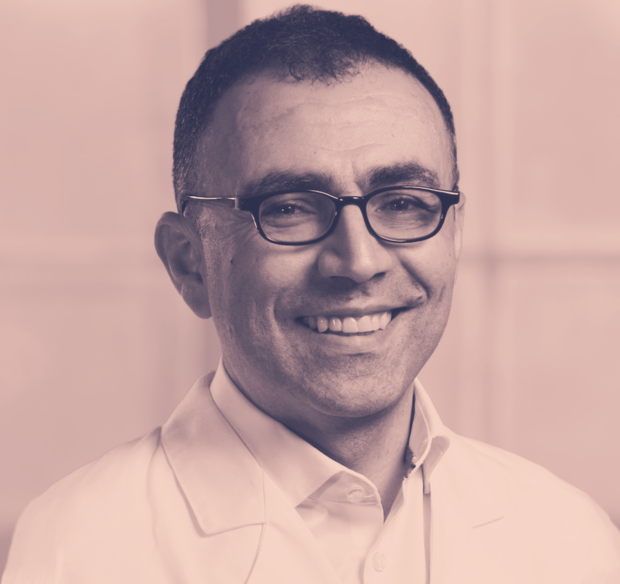
- Dr. Bobby Mukkamala, a board-certified otolaryngologist and current president of the American Medical Association, was diagnosed with a grade II astrocytoma. He also has an IDH mutation, which made him eligible for the medication vorasidenib he uses for treatment.
- His first-hand experience as a patient helps him be more in touch with patient concerns, including common questions that may not be top of mind for physicians, but weigh heavily on patients.
- “When I talk about diagnoses [as a physician], everything is grounded in science—and I’m completely comfortable saying, ‘We’re not sure.’ But “From a patient’s perspective, hearing that uncertainty can plant doubt in an otherwise hopeful mindset,” Dr. Mukkamala explained.
- Dr. Mukkamala deals with the amount of stress and uncertainty his diagnosis brings by tapping into his faith rooted in his childhood.
- He leans into impermanence, the idea that everything changes, nothing lasts forever.
- “I’m not attached to my body… Whatever happens, happens. I’ll do exactly what these guys tell me to do, but I’m not attached to the outcome. And that’s very liberating.” His words reflect a kind of surrender—not giving up, but letting go of the illusion of control.
Dr. Bobby Mukkamala, President of the American Medical Association (AMA), says his approach to living with brain cancer is profoundly shaped by spiritual lessons from childhood—especially the idea of impermanence and detachment. Raised in both Catholic and Hindu traditions, he recalls the practice of impermanence and being taught not to cling to the body or fear its changes.
A board-certified otolaryngologist and head and neck surgeon, Dr. Mukkamala’s leadership is shaped by more than clinical expertise—it’s personal. He was diagnosed with a grade II astrocytoma. His symptoms emerged when he found himself struggling to deliver a speech.
“In hindsight, the fact that it got diagnosed six months before I was elected AMA President instead of during my presidency, you can’t plan that any better,” Dr. Mukkamala explained to SurvivorNet.
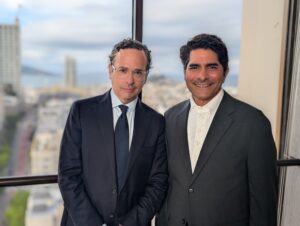
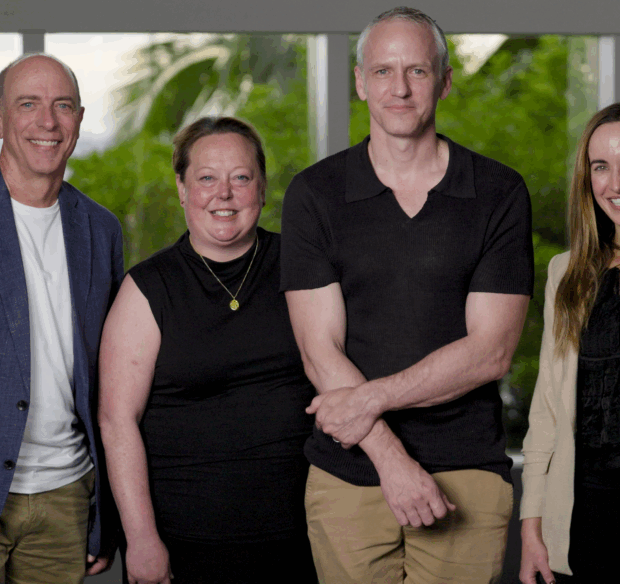
Steve Alperin, SurvivorNet CEO & Dr. Bobby Mukkamala
He underwent a 12-hour awake craniotomy as part of his initial treatment.
“90% of an eight-centimeter tumor was removed,” he says, giving him enough time to recover, go through speech therapy, and start treatment with vorasidenib (brand name: Voranigo).
“Six months is a perfect amount of time to get all that in order and then become inaugurated to become the voice of physicians in healthcare in this country,” Dr. Mukkamala said.
Throughout a wide-ranging discussion, Dr. Mukkamala, who is currently undergoing treatment, said that as a patient, you can’t overemphasize just how much anxiety and uncertainty there is.
“Navigating the healthcare system from a patient perspective, I guess that’s made me a different doctor because of this experience,” Dr. Mukkamala explained.
He added that his first-hand experience has helped him be more in touch with patient concerns, including common questions that may not be top of mind for physicians, but weigh heavily on patients.
“When I talk about diagnoses, everything is grounded in science—and I’m completely comfortable saying, ‘We’re not sure.’ But from a patient’s perspective, hearing that uncertainty—especially around a new medication like vorasidenib, which might help, might harm, or might trigger other chemical effects—can plant doubt in an otherwise hopeful mindset,” Dr. Mukkamala explained.
“You’ve read online that you might live 10 years based on Google, maybe even double that, and suddenly there’s this cloud of ‘we don’t know.’ That kind of ambiguity creates stress,” he added.
Other lingering concerns Dr. Mukkamala began thinking differently about since stepping into the shoes of a patient include:
“How long will my copay be this high? How long do I have to go to the lab every two weeks and fit that into my schedule as a doctor, let alone anybody?”
Following his diagnosis, Dr. Mukkamala says, “It’s made me a better doctor. I’m more empathetic.”
With an incredible, good-natured smile, Dr. Mukkamala described the three weeks he and his family spent waiting for the results of his genetic and molecular testing to come back. As the son of a physician, his family knew that these results would go a long way toward determining his course of treatment and, of course, his expectations for survival.
Dr. Mukkamala has an IDH mutation, which made him eligible for the medication vorasidenib. This treatment is an oral medication designed specifically to target low-grade gliomas that have mutations in the IDH1 or IDH2 genes.
Despite his diagnosis, he continues to navigate his life and career as normally as possible, which includes tending to his patients, serving as AMA president, and being a loving father and husband.
While continuing to travel and advocate on behalf of the AMA, the feeling of uncertainty persists, affecting not only him but also his family.
While preparing to represent the U.S. at the World Medical Association meeting in Uruguay, he faced a deeply personal dilemma: running out of his cancer medication mid-trip.
“I’m getting 10 days’ worth of pills, and I’ve got six days left, and my trip is 10 days,” he recalled. “So now I’m going to be four days without the vorasidenib.” His wife scrambled to get more, even calling the company in tears. “Obviously, it’s not a scientific fear… but from the patient’s perspective, it’s like a whole new experience dealing with that.”
That moment of vulnerability underscored a larger truth: the emotional toll of cancer doesn’t always follow clinical logic. “The people who know what this pill does are totally cool with that,” he said of missing a few doses. “But it’s just funny to have a part of my brain in both.”
How Dr. Mukkamala Taps Into Impermanence to Cope
Dr. Mukkamala also shared a remarkable perspective on how he deals with the amount of stress and uncertainty his diagnosis brings. To cope, he taps into his faith rooted in his childhood.
“I grew up going to Catholic school my whole life,” he shared, “but my parents moved here from India, and so I went to a Hindu class called a Bala Vihar.” That dual upbringing exposed him to two distinct belief systems—one rooted in ritual and doctrine, the other in detachment and reincarnation.
Years later, when faced with a life-altering diagnosis, those early teachings resurfaced in unexpected ways.
“All of a sudden, when I tell them that, you know what? I’m not attached to my body… You sent me every Sunday to class for my entire childhood about not being attached to my body. And now that I have this thing going on, I’m not attached to my body.”
That shift in perspective gave him a sense of peace.
His story serves as a reminder that healing isn’t just physical—it’s also emotional and spiritual. His ability to draw strength from both science and his faith offers a powerful example of resilience in the face of uncertainty.
The impermanence—the idea that everything changes, nothing lasts forever—that Dr. Mukkamala often leans on can be simultaneously unsettling and deeply liberating. His perspective reflects a kind of surrender—not giving up, but letting go of the illusion of control.
Top 3 Things Physicians Should Know About Decision-Making With Glioma Patients
Dr. Mukkamala has identified three key takeaways that he urges physicians to adopt to improve patient care. His own lived experience helps drive his enhanced advocacy.
- Use Your Voice to Advocate for Patients
Physicians must speak boldly and collectively—especially through institutions like the AMA—to push for policies and systems that truly meet patients’ needs. “The voice we have… needs to be a loud voice to improve our ability to care for our patients,” Dr. Mukkamala said. - Recognize the Emotional Weight of Emerging Treatments
Cutting-edge therapies like vorasidenib “offered me hope, but they can also bring uncertainty.” Doctors should acknowledge the patient’s emotional experience—questions like “How long do I have to take this pill?” or “Will my insurance help cover the costs,” or addressing the known side effects should all be communicated with empathy as science evolves. - Push for Value-Driven Healthcare Spending
While breakthrough medications can transform lives, Dr. Mukkamala emphasizes that much of U.S. healthcare spending doesn’t directly improve patient outcomes. “A lot of our spending has nothing to do with making my life better… It’s the process to get to that point,” Dr. Mukkamala said.