

What You Should Know
- CAR T-cell therapies like Breyanzi (liso-cel) and Yescarta (axi-cel) are delivering complete response rates above 70–80% in relapsed follicular lymphoma, with durable remissions extending beyond five years — challenging the long-held belief that the disease is incurable.
- Dr. Changchun Deng–a leading expert on follicular lymphoma–believes CAR T-cell therapy offers the strongest chance yet for true long-term remission — and potentially cure — in fit patients with follicular lymphoma.
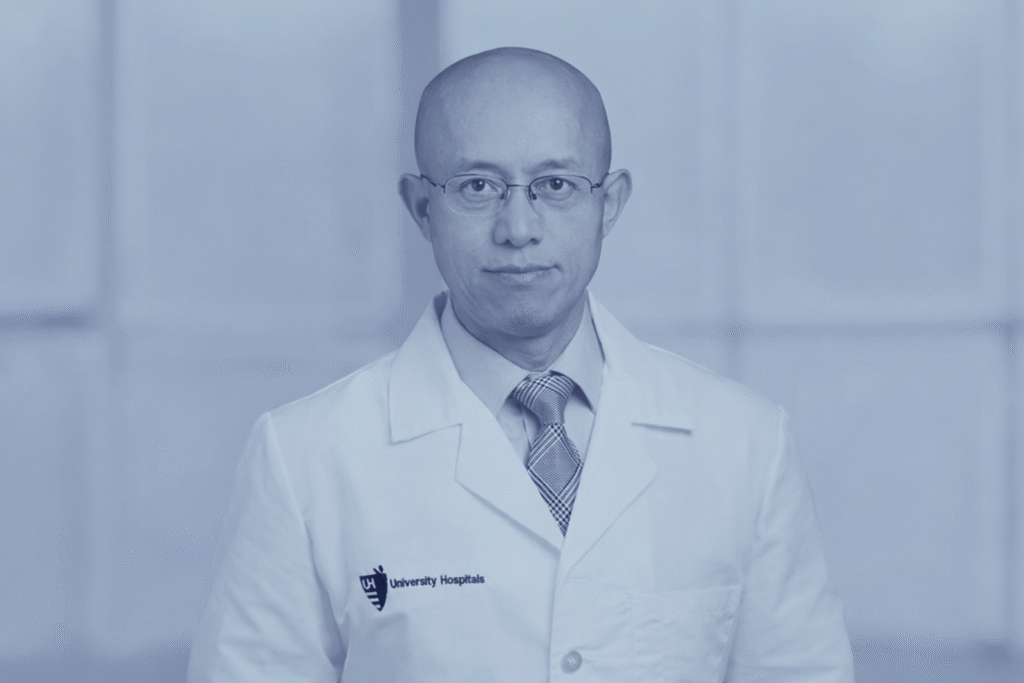
According to UH Seidman Cancer Center’s Dr. Changchun Deng–a leading researcher and oncologist-hematologist who spoke with SurvivorNet–CAR T-cell therapy is reshaping expectations for patients with follicular lymphoma, a disease historically considered incurable.
“I think the CAR T-cell therapy gives us the best chance to really deliver a cure for patients with follicular lymphoma,” Dr. Deng says. “Up to now, follicular lymphoma, in all the textbooks, is considered not curable.” Deng and a team of researchers have conducted CAR T and other significant cell therapy research in recent years at Seidman’ Wesley Center for Immunotherapy at UH.
Two CAR T-cell products — Breyanzi (liso-cel) and Yescarta (axi-cel) — are now approved for follicular lymphoma and are commonly used in the second- and third-line settings with CAR T-Cell therapy options continuing to expand across lymphoma subtypes and the FDA’s revision of the label for Yescarta (axi-cel) just days ago — removing prior “Limitations of Use” related to relapsed or refractory primary central nervous system lymphoma (PCNSL) and formally allowing clinicians to treat eligible PCNSL patients under the existing large B-cell lymphoma label.
CAR T-Cell Data For Follicular Lymphoma
- 5-year ZUMA-5 follow-up (axi-cel/Yescarta)
- Population: 127 patients with follicular lymphoma (FL) and 31 with marginal zone lymphoma
- Overall response rate (ORR): 90%
- Complete response (CR) rate: 75%
- Median duration of response (DOR): 60.4 months
- Median progression-free survival (PFS): 62.2 months
- TRANSCEND FL study (liso-cel/Breyanzi)
- Population: Relapsed/refractory (R/R) follicular lymphoma (FL) patients, including high-risk second-line (2L) and third-line or later (3L+) cohorts.
- 3L+ FL cohort:
-
- ORR: 97% (95% CI: 91.6–99.4)
- CR: 92% of responders achieved CR
- Median time to response: ~1 month
-
What stands out most, Dr. Deng explains, is the durability of benefit. With prior chemotherapy approaches, progression-free survival typically shortened with each successive line of therapy.
“Even in the third-line setting, the percentage of patients with complete response is well over 70%. In some cases, 80%. So, that was really remarkable,” Dr. Deng says, noting that even among heavily pretreated patients, response rates have been striking.
“If you look at the progression-free survival, the curve doesn’t drop,” Dr. Deng says. “In the old times with chemotherapy, in the second, third-line setting, with every subsequent line, the line drops faster and faster.”
In contrast, CAR T-cell therapy appears to produce long-lasting remissions, with survival curves that remain stable rather than steadily declining. Early trial data now show some patients maintaining remission beyond five years — a milestone that begins to raise the possibility of cure.
“CAR T-cell therapy probably give us the best chance of have actual long duration response, meaning more than five years,” Dr. Deng says. For fit patients, Dr. Deng believes CAR T-cell therapy may offer the best chance at extended disease control, and potentially something once thought impossible in follicular lymphoma: true long-term remission, and perhaps cure.