

What You Should Know
An all-oral combination of decitabine/cedazuridine (Inqovi) plus venetoclax could expand options for older AML patients ineligible for intensive therapy, with efficacy comparable to IV regimens. “The huge benefit to patients is that it’s an all-oral regimen,” said Tiffany Tanaka of UC San Diego Health —prompting key questions about when to use it and which patients are best suited.
- Inqovi is an oral combination pill of decitabine and cedazuridine currently approved as a single agent for MDS and CMML.
- A supplemental NDA was accepted by the FDA in July 2025 to expand the indication to include adults with AML who are ineligible for high-dose induction chemotherapy. The PDUFA target action date is February 25, 2026.
- The supplemental NDA was supported by the ASCERTAIN-V clinical trial, which showed a CR rate of about 40%.
- All-oral regimen expands access and offers an additional treatment option for this vulnerable population.
An all-oral combination anticancer treatment decitabine and cedazuridine (Inqovi) given with venetoclax (Venclexta) may soon be widely available for older AML patients who are ineligible for intensive chemotherapy. Inqovi is currently approved as a single agent for use in myelodysplastic syndromes (MDS) and chronic myelomonocytic leukemia (CMML), and a supplemental NDA was accepted by the FDA in July 2025, with a PDUFA target action date of February 25, 2026, for the addition with venetoclax for AML.
About half of all patients diagnosed with AML cannot receive the recommended first-line treatment of “7+3” high-dose induction chemotherapy due to older age, frailty and concurrent health ailments. Other low intensity options require multiple consecutive daily in-clinic injections.
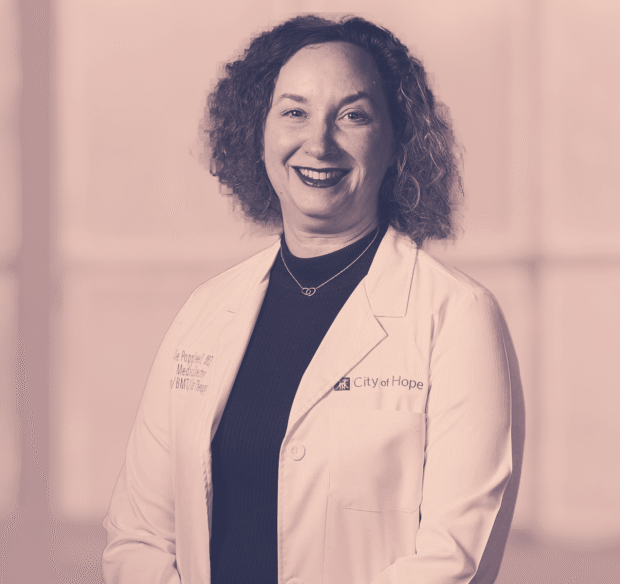
“The huge benefit to patients is that it’s an all-oral regimen, which is highly convenient compared to the IV infusion forms. With azacitidine, you have to come in seven days in a row. With decitabine, it’s five days in a row,” said Dr. Tiffany Tanaka, an associate professor of Hematology and Cellular Therapy at the University of California San Diego.
What did the ASCERTAIN-V clinical trial results show?
The supplemental NDA was based on the results of 101 patients enrolled the ASCERTAIN-V (NCT04657081) clinical trial. The patients were 75 and older with newly diagnosed AML who were ineligible for intensive induction chemotherapy. The trial met its primary and secondary endpoints.
“They had very similar outcomes compared to the IV azacitidine and venetoclax combination. The composite complete remission rate was about 40%. The CR plus CR with incomplete hematologic recovery rate was about 65%. And then the tolerability was very similar,” said Dr. Tanaka. After reaching CR, over 75% of patients remained in CR and the median duration of response had not been met at 12 months.
Expanding access and improving quality of life with an all-oral regimen
For patients, the benefit of an all-oral regimen is convenience. Other treatments require five to seven days in a row in the clinic to receive infusions. However, Dr. Tanaka points out that there are benefits to this, too.
“The benefit to having [patients] come in seven days in a row is that your staff gets to lay eyes on them,” she said. For some patients, they can start on an IV treatment and switch to the new oral combination. “I might start the patient on the traditional IV HMA and have the patient learn that chemo learning curve. Once they feel comfortable with the tempo of chemo, maybe that’s when you switch them over to oral chemo.”
Patients may still need to be in the clinic two or three times a week for transfusions and monitoring. This regimen is highly myelosuppressive (grade ≥3 adverse events in 98% of patients, febrile neutropenia (49.5%), anemia (38.6%), and neutropenia (35.6%). Patients still need frequent bloodwork and transfusions throughout each 28‑day cycle, maybe not during the first infusion week. The difference is that patients do not require coming in for the initial infusion week in the clinic. The first cycle is the “debulking” phase, which requires especially close monitoring. Subsequent cycles also require frequent lab checks and transfusions. This regimen does not eliminate close follow-up or the need for transfusion support, even though it is oral.
“It might be that it’s not much more convenient, at least for the first cycle. But for subsequent cycles, for people that achieve CR, it’s definitely convenient to be home more often,” said Dr. Tanaka.
For many older adults, especially older adults who live far from treatment centers, the burden of traveling to and from the clinic can be exhausting. An all-oral regimen that reduces the amount of time a patient needs to be seen in clinic can lessen this burden and help improve quality of life.
“The patients that you generally might put on the all-oral regimen are the ones that have good social support. They have a caregiver, they’re totally responsive and able to pick up on side effects,” said Dr. Tanaka. “For the older patient, the patient who lives further away, [this treatment] is really nice. And it’s really nice to know that it’s generally well tolerated with similar outcomes.”
This article has been medically reviewed by Dr. Natalie A. Rafaeli