The INDIGO Seizure Data: A Signal Clinicians Can't Ignore
- A separate exploratory analysis found that vorasidenib was associated with a 72% reduction in on-treatment seizure rates compared to placebo.
- The effect was most pronounced among patients with oligodendroglioma, and the panel explained why the biology likely drives that difference.
- Seizure burden determines whether patients can drive, work, and function, which strengthens the argument that this is more than a secondary data point.
- The data rely on patient-reported outcomes, a known limitation, but the panel views it as a meaningful signal rather than a reason to dismiss the finding.
New INDIGO data put a hard number on something neuro-oncologists have been noticing in the clinical setting.
When the INDIGO trial established vorasidenib as a standard of care for Grade 2 IDH-mutant glioma, the primary endpoint was progression-free survival. Seizure control was never the point, but exploratory data presented at the 2026 American Society of Clinical Oncology (ASCO) are making clinicians look twice.
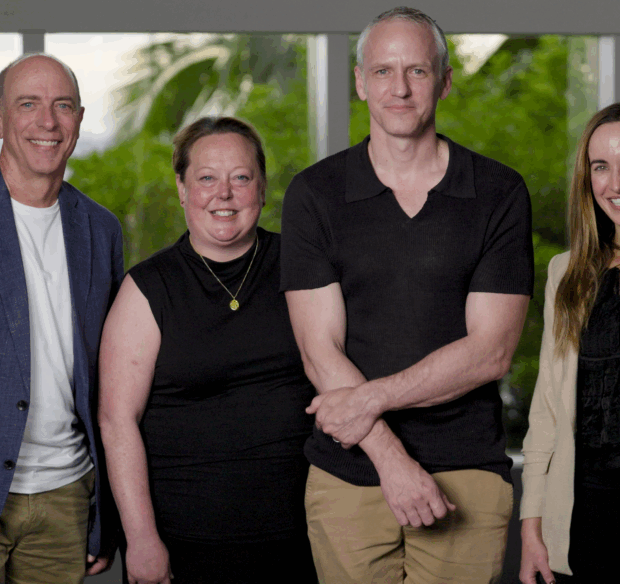
To unpack what the numbers mean in practice, SurvivorNet convened a panel of leading neuro-oncologists at the 2026 ASCO Annual Meeting in Chicago — Dr. Heather Leeper of the University of Chicago, Dr. Rimas Lukas of Northwestern, Dr Omar Butt of WashU and Dr. Nicholas Castro Gonzalez of Brigham and Women’s Hospital and Dana-Farber — to discuss the seizure data, what’s driving it biologically, and whether it’s changing how they treat.
The Data
The INDIGO exploratory analysis found that patients treated with vorasidenib experienced a 72% reduction in on-treatment seizure rates compared to placebo — 15.9 seizures per person-year compared with 64.9 in the placebo group (95% CI, 9.1–27.7; p=0.0002).
The effect was most pronounced in oligodendroglioma patients at 6.9 seizures per person-year (p<0.0001), compared to astrocytoma, where the difference did not reach statistical significance (17.5 per person-year; p=0.6448). This builds on the 2025 Lancet Oncology update, which first flagged seizure rates of 18.2 vs. 51.2 per person-year between the two arms.
Why It Matters Beyond the Scan
For patients with Grade 2 glioma — who are often young, working, and otherwise living normal lives — seizure burden isn’t just a clinical metric. It impacts their quality of life. The seizure burden determines whether they can drive, hold a job, or feel safe alone.
“It’s not just what’s happening radiographically,” Dr. Leeper said.
“It’s how the person living with the tumor. When people have a lot of seizures, they can’t drive, they can’t go to work. Having seizures is terrifying for the person and everyone who sees it,” Dr. Leeper continued.
Vorasidenib is not an anti-seizure drug as it was never designed for seizure management.
One emerging question experts are watchful for is whether patients are reducing or coming off anti-seizure medications as a result of Vorasidenib. Those questions weren’t captured in the trial. But the seizure signal is already influencing treatment timing.
For Dr. Lukas, uncontrolled seizures have become a tipping point.
“In the pre-vorasidenib era, I might’ve said we’re not going to give you radiation and chemo right now to help control your seizures, but seizure activity may be enough to push me.”
A Real Limitation
The panel was candid about a methodological constraint: the seizure data rely entirely on patient-reported outcomes.
“It’s going to miss everything that’s happening while they’re sleeping,” Dr. Lukas said. “It’s going to agglomerate a bunch of seizures into a single episode. It’s not a fantastic readout, but it’s kind of what we have.”
The Biology Behind the Seizure Benefit
The tumor-type difference isn’t random. Dr. Castro Gonzalez outlined the leading hypotheses: oligodendrogliomas are more cortically distributed and infiltrative, so reducing 2-hydroxyglutarate (2-HG) — the oncometabolite produced by mutant IDH — may directly lower cortical irritability.
2-HG may also lower the seizure threshold on its own, meaning that eliminating it could be protective on its own.
A third, more speculative line of thinking involves the emerging neuroscience of glioma: recent studies have documented functional synapses between glioma cells and neurons, suggesting that tumor-driven electrical activity may fuel growth in certain cell populations, and that dampening it may work in both directions.
“We are just at the very beginning of trying to understand that,” Dr. Castro Gonzalez said.
The Bottom Line
The seizure data from INDIGO aren’t definitive — the field will need more rigorous seizure-specific endpoints in future trials. But a 72% reduction is a meaningful number for patients living with this disease, and increasingly, it’s one their doctors are factoring in.