


The Future of IDH Inhibitors in Glioma
- Although the FDA approved vorasidenib (Voranigo) for certain grade 2 IDH-mutant gliomas based on its ability to extend progression-free survival, overall survival data remain immature because these tumors grow slowly and many patients in the placebo group later crossed over to receive the drug.
- Dr. Michael Youssef, a neuro-oncologist at Houston Methodist, says neuro-oncologists currently rely on the phase 3 INDIGO trial, which showed that vorasidenib significantly delayed tumor growth and prolonged the time before patients needed radiation or chemotherapy, with some participants remaining progression-free years after starting treatment.
- Dr. Youssef believes vorasidenib’s value lies in providing a less-toxic treatment option that can preserve quality of life and delay more intensive therapies, though the magnitude of any future overall survival benefit remains unknown.
- The drug’s generally manageable side-effect profile, combined with ongoing trials testing vorasidenib in grade 3 gliomas and in combination with other treatments, is helping shape a new treatment paradigm centered on extending time without disease progression or additional intervention.
The FDA approved vorasidenib (Voranigo) in August 2024 for patients 12 and older with grade 2 astrocytoma or oligodendroglioma carrying a susceptible IDH1 or IDH2 mutation, following surgery. It was the first targeted therapy for this population. The approval rested on progression-free survival (PFS), not overall survival (OS).
More than three years after the trial’s first readout, median OS has still not been reached. This leaves neuro-oncologists making treatment decisions without the endpoint they would usually reference.
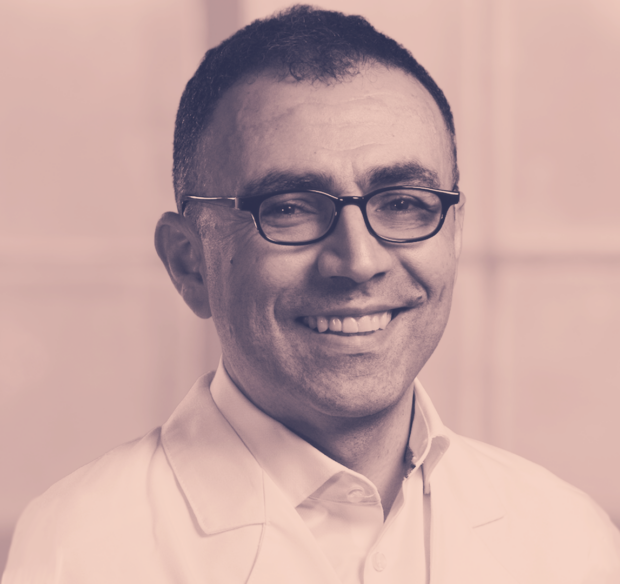
Dr. Michael Youssef, a neuro-oncologist at Houston Methodist who treats primary brain tumors, tells SurvivorNet Connect that he weighs the data that is currently available to make treatment recommendations in the meantime.
Why Overall Survival Data Are Slow to Arrive
Grade 2 IDH-mutant gliomas grow slowly, and the patients who have them are typically young and otherwise healthy. INDIGO investigators note that OS, a secondary endpoint, will need extended follow-up, potentially many years, given the biology of these tumors, and that real-world data will also be needed.
Trial design adds a second complication.
After INDIGO was unblinded in March 2023, patients on placebo were allowed to cross over to vorasidenib. Crossover is appropriate once a benefit is clear, but it makes any eventual OS comparison between the original arms harder to interpret.
In place of OS, Dr. Youssef starts with the phase 3 INDIGO trial, which enrolled 331 patients with residual or recurrent grade 2 IDH-mutant glioma whose only prior treatment was surgery.
“As clinicians, when we think about overall survival with IDH inhibitors, we go back to the INDIGO study, which looked at patients with low-grade glioma who were placed on IDH inhibitor therapy before they had any type of treatment, no radiation, no chemotherapy,” Dr. Youssef explains. “And what we saw in those patients was good progression-free survival. So these patients lived longer without seeing tumor growth.”
Patients on vorasidenib also went much longer before needing radiation or chemotherapy, and that gap has held up with each analysis.
At the 41.6-month mark:
- 98 of 168 patients randomized to vorasidenib (58.3%) were still on treatment
- The investigator-assessed response rate had risen to 31.5%
“There are some patients on the original study who have yet to have growth, and they’re still on Voranigo without any issues,” Dr. Youssef says.
Working Around the Gap: Less Toxicity, More Time
For Dr. Youssef, the case for treating now rests on what vorasidenib adds to the sequence of care rather than on a survival curve.
“The whole idea behind the IDH inhibitor therapy treatment is that patients will live longer having this additional treatment option,” he explains. “Having this option for us in our back pocket that’s less toxic, that does provide a good amount of progression-free survival does tell us that we will see an improvement in overall survival.”
The less-toxic part of that argument has trial support. Many grade 2 patients are not given chemoradiotherapy right away, despite its potential for lasting remission, because of the risk of neurocognitive harm.
In INDIGO’s final blinded analysis, vorasidenib slowed tumor growth and improved seizure control without measurable harm to quality of life or neurocognition.
“The most common side effect is an elevation in the liver enzyme, so labs are checked frequently upfront and then on a regular schedule when patients are getting MRIs,” Dr. Youseff says. “We may see some fatigue when patients begin taking the drug at first, but this quickly subsides.”
The survival part is less certain, and Dr. Youssef is direct about that.
“How much of that improvement will we see? We don’t know,” he says. “But in my case, any improvement is improvement, and that’s something I’m looking forward to seeing.”
In earlier low-grade glioma research, long-term follow-up found that early radiotherapy lengthened PFS, but OS ended up similar between groups. A PFS benefit is not a guaranteed OS benefit in this disease.
Beyond Grade 2: The Future of Vorasidenib
Vorasidenib’s label covers grade 2 disease only. The available data do not yet support its use in high-risk low-grade or high-grade glioma, and combination trials are needed to define a role there.
“It’s commonly in clinical trials at this point, being tested in the grade three population,” Dr. Youssef explains. “There are a couple of clinical trials out there looking at grade three astrocytoma and oligodendroglioma in combination with chemotherapy to see if there’s an additive effect.”
One of these is the Alliance phase 3 trial A072301 (NCT07215910), which is now recruiting. It randomizes patients with newly diagnosed grade 3 IDH-mutant astrocytoma to vorasidenib or placebo alongside adjuvant temozolomide after radiation.
The primary endpoint is PFS by blinded independent review, with OS as a secondary endpoint. As of 2023, vorasidenib was also being tested with pembrolizumab in a phase 1 study in grade 2 and 3 glioma.
Until OS data mature in either setting, Dr. Youssef’s treatment approach is: use the PFS and time-to-intervention benefit now, monitor closely, and treat each additional year without radiation or chemotherapy as a gain in its own right.