

Grade 2 Glioma & The Debate on When to Start Vorasidenib
- With each new INDIGO update, PFS has grown for patients with Grade 2 glioma treated with vorasidenib after surgery — 27.7 months in 2023, extended further in the 2025 Lancet Oncology update, and now 44.1 months in 2026.
- Results show median progression-free survival among patients treated with vorasidenib was 44.1 months.
- The gap between treating and waiting is now nearly four-to-one: 44 months on vorasidenib vs. 11 months on placebo.
- Yet, there is still question about when to start vorasidenib. The case for starting early rests on biology. Even after a successful resection, residual tumor is almost always present. The case for waiting depends more on individual patients.
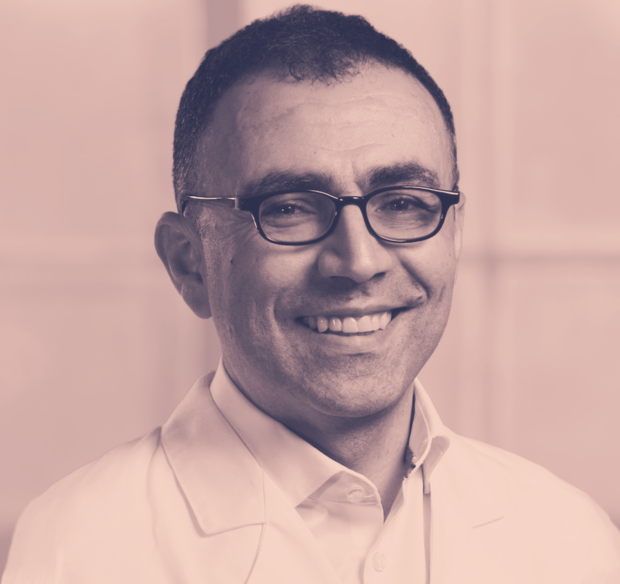
- One expert panelist tells SurvivorNet Connect that he will update how long he keeps patients on vorasidenib based on the data. “Historically, prior to this year, I was doing it for about two-ish years. Now with the updated data, I will be continuing it ad nauseam until I see clear evidence of failure,” Dr. Omar Butt of Washington University in St. Louis says.
For years, watch-and-wait was the default for many patients with Grade 2 IDH-mutant glioma after surgery. The tumors are slow-growing, and the existing treatments, such as radiation and chemotherapy, carry real costs. Taking a less aggressive approach, such as “watch and wait” for a while, made sense.
That logic hasn’t disappeared in glioma care, but experts tell SurvivorNet Connect it’s becoming harder to defend as trial data continue to show that starting these patients on vorasidenib (VORANIGO) after surgery leads to long-term progression-free survival.
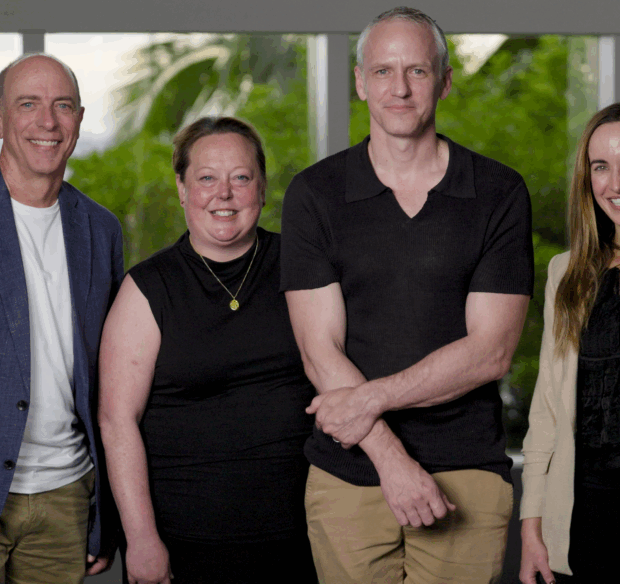
To understand what the updated INDIGO data presented at the 2026 American Society of Clinical Oncology (ASCO) Annual Meeting mean, SurvivorNet Connect brought together four of the country’s leading neuro-oncologists for a glioma peer-to-peer panel discussion.
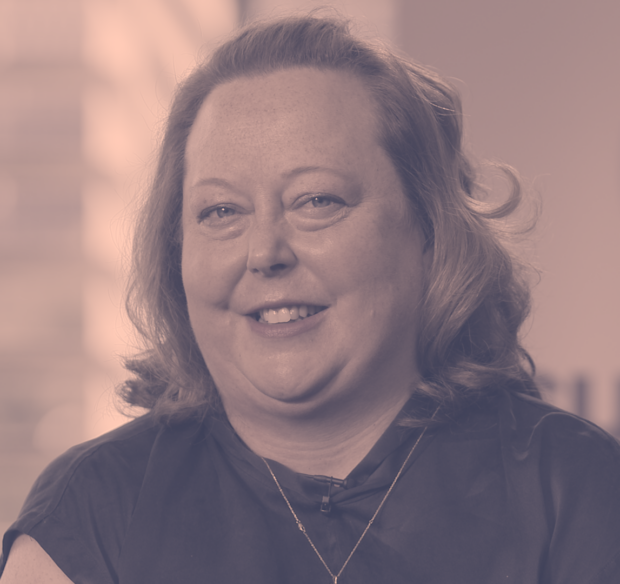
Dr. Rimas Lukas of Northwestern moderated the discussion alongside Dr. Nicholas Castro Gonzalez of Brigham and Women’s Hospital and Dana-Farber, Dr. Heather Leeper of the University of Chicago, and Dr. Omar Butt of Washington University in St. Louis. They touched on the question the data can’t fully answer yet: when should treatment actually start?
What 44 Months PFS Changes
Updated INDIGO trial data showed median progression-free survival of 44.1 months with vorasidenib — compared to just 11 months in the original placebo arm.
When INDIGO was first published in 2023, median PFS was 27.7 months. By the 2025 Lancet Oncology update, the curve hadn’t even reached a median — too few patients had progressed to calculate one.
Now at ASCO 2026, with longer follow-up, that number has finally landed at 44.1 months. The curve hasn’t flattened. That trajectory quietly shifts the burden of proof in the clinical conversation. For years, the implicit question was why start now? With each update, it’s becoming why wait?
A Debate With No Clear Answer
The case for starting treatment early rests on biology. Even after a successful resection, residual tumor is almost always present.
“Even in the hands of our most competent neurosurgical colleagues, we never achieve a complete resection,” said Gonzalez. “The IDH mutation and its activity are what drive tumor growth over time. And if we have a way to intervene, I think we should.”
Dr. Butt said he now offers vorasidenib to all of his resected patients, and he says the updated data have changed how long he keeps them on it.
“Historically, prior to this year, I was doing it for about two-ish years. Now with the updated data, I will be continuing it ad nauseam until I see clear evidence of failure,” Dr. Butt said.
The case for waiting is less about the biology and more about the patient in front of you. For someone who just had an extensive resection with no visible residual disease, serial scans every three months will catch early changes, and the drug’s 15-to-16-month median time to response means there’s leeway to work with.
“At the first sign that something starts to change in a way that is concerning, that’s when we would want to start vorasidenib, knowing what kind of a lead time it has,” said Dr. Leeper.
For moderator Dr. Lukas, the honest challenge is that the data simply may never answer the earliest-initiation question.
“It’s a scenario where we’re not going to have clinical trial data to help guide us probably ever.” Both Leeper and Lukas noted that a flurry of seizure activity — suggesting occult infiltration — is enough to move them earlier, regardless of what the scan shows.
Considering Logistics & Patient Preference
Even where biology favors early treatment, getting there isn’t always straightforward. Young patients often resist indefinite daily medication. Dr. Butt described treating younger patients as “a struggle to just make them take their antiepileptic.”
Additionally for younger patients, fertility is a more complex variable because the impact of IDH inhibitors on fertility is not yet well characterized, and banking conversations must happen before initiation.
“In patients thinking of starting a family within a year or two, sometimes we say we’re just going to watch,” said Dr. Gonzalez.
Financial toxicity — coverage gaps, copays, access, etc. — adds another layer that trial data doesn’t capture.
The key takeaway here is that updated data call the watch-and-wait approach for starting vorasidenib into question. The value of adding the drug is clear, and treatment decisions must be weighed carefully with each patient.